


Part 3: “The Digital Age: Blurring Lines Between Reality and Fantasy”
his article is part of our series, The Evolution of Theme Park Design, celebrating the milestones and innovations that have shaped the world of themed entertainment. Explore the full series on our blog.
By the turn of the millennium, the world of themed entertainment was poised for another leap forward. The 2000s and 2010s ushered in a digital revolution that would once again redefine what was possible in theme parks and immersive experiences. This era was marked by the convergence of physical environments and digital technology, blurring the lines between reality and fantasy in ways that would have been unimaginable just a decade earlier.
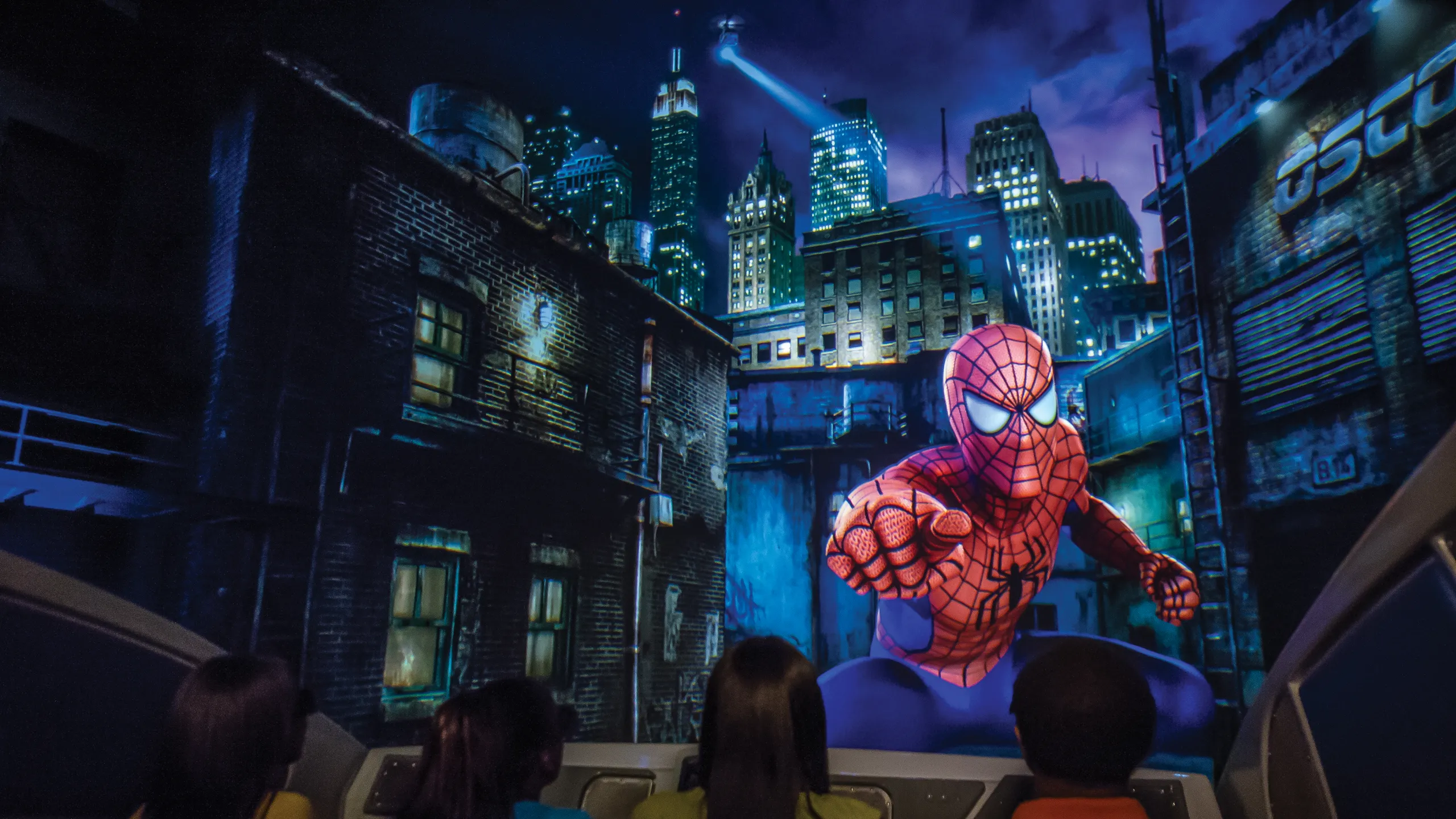
Digital media became a core element of attraction design. High-definition projection, LED displays, and surround sound systems allowed for environments that could shift and adapt in real time. Attractions were no longer limited by static sets or physical props. Now entire worlds could be reimagined at the press of a button. Rides like Universal’s The Amazing Adventures of Spider-Man and Disney’s Soarin’ set new standards for blending filmed media with physical effects, creating experiences that felt both tangible and dreamlike.
Interactivity also entered a new phase. RFID wristbands, custom apps, and real-time guest tracking gave visitors a level of agency that was previously impossible. Suddenly, guests could influence storylines, unlock personalised content, or even compete with friends and strangers for high scores and unique outcomes. Attractions like Toy Story Midway Mania and Harry Potter and the Forbidden Journey showcased how digital integration could make every visit unique.
Augmented reality (AR) and early virtual reality (VR) experiments began to appear, hinting at a future where the digital and physical worlds would be even more seamlessly connected. While not every experiment was a runaway success, these technologies paved the way for the next generation of immersive experiences where guests could see, touch, and interact with stories in entirely new ways.
Behind the scenes, the creative process was also transformed. Advanced 3D modelling, real-time rendering, and collaborative cloud platforms allowed design teams to iterate rapidly, visualise concepts in detail, and coordinate across continents. At Blue Alchemy Labs, these tools became essential to our workflow, enabling us to bridge creative vision and technical delivery with unprecedented speed and precision.
But perhaps the most profound change was philosophical. The digital age reinforced the idea that themed entertainment was no longer just about passive observation. Instead, it was about active participation inviting guests to become co-creators, explorers, and even heroes within the worlds we build. The traditional boundaries between designer and audience, between story and experience, began to dissolve.
For us at Blue Alchemy Labs, this era underscored the importance of adaptability and future-proofing. By integrating digital content, interactive systems, and flexible environments, we could ensure that our projects remained relevant and engaging long after opening day. Our mission, to transform creative ideas into unforgettable experiences, found new expression in a world where the only limit was imagination.
The 2000s and 2010s proved that with the right blend of technology and storytelling, the extraordinary could become everyday. As we look to the next chapter, the question is no longer “what can we build?” but “what worlds can we invite people to create with us?”
Stay tuned for the next instalment, where we’ll explore the trends and innovations shaping the future of theme park design and immersive experiences. Missed a post? Visit our archive to catch up on the series and discover how Blue Alchemy Labs is shaping the future of immersive design.