


Part 2: Revolutionising the Ride: The Tech Boom That Changed Everything
This article is part of our series, The Evolution of Theme Park Design, celebrating the milestones and innovations that have shaped the world of themed entertainment. Explore the full series on our blog.
The 1980s and 1990s marked a seismic shift in the world of theme parks, a period where creative ambition met rapid technological progress. These decades didn’t just introduce new thrills; they fundamentally changed how attractions were conceived, built, and experienced.
During this era, the rise of computer-controlled show systems was a game changer. Programmable logic controllers (PLCs) allowed for precise timing and synchronisation between ride vehicles, lighting, audio, and special effects. Suddenly, attractions could be choreographed with split-second accuracy, creating seamless and reliable guest experiences.
Animatronics also reached new heights. Disney’s Imagineers and Universal’s designers pushed the boundaries with hydraulic and pneumatic systems, giving life to ever more expressive figures. The iconic T-Rex in Universal’s Jurassic Park: The Ride (1996) and the fluid movements of characters in Disney’s Splash Mountain (1989) were only possible thanks to advances in robotics and control systems.

Projection mapping and large-format video displays began to appear, transforming static sets into dynamic, ever-changing environments. Epcot’s Spaceship Earth and Universal’s Back to the Future: The Ride (1991) showcased how film, video, and physical sets could merge to create new dimensions of storytelling. This was also the age when laser effects, fibre optics, and programmable LED lighting made their debut, adding visual punch and flexibility never seen before.

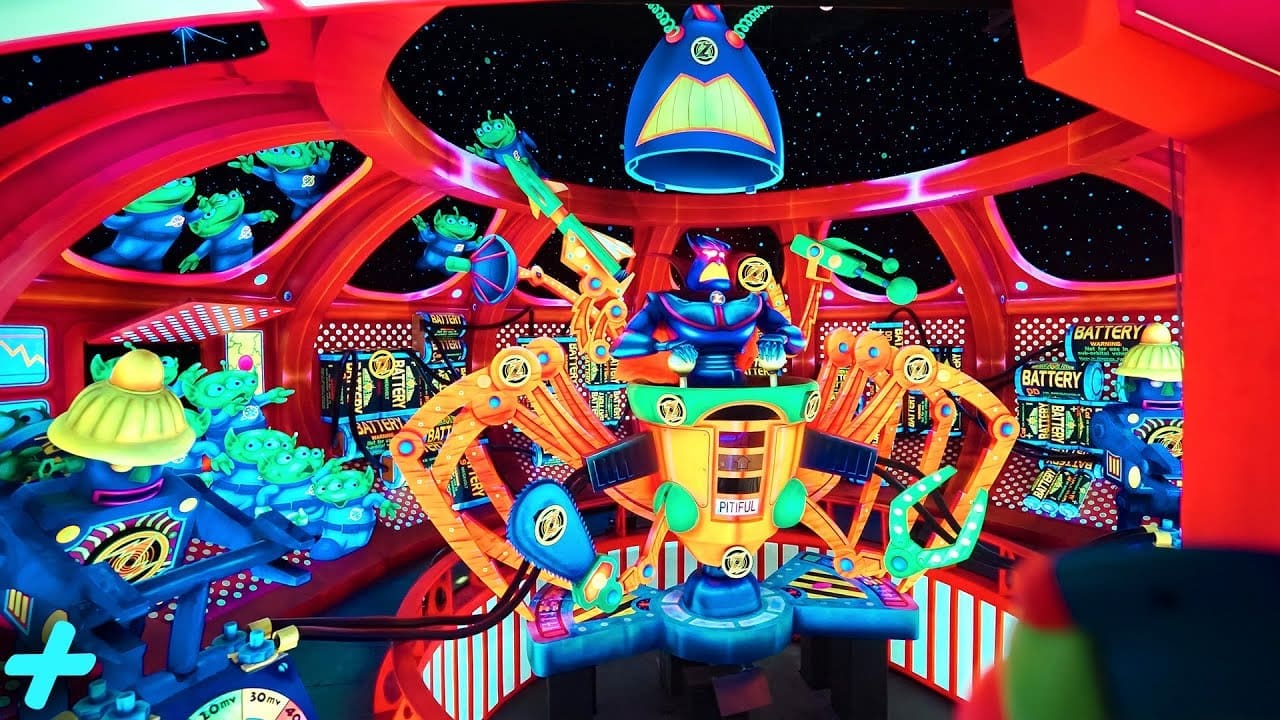
Interactivity became a buzzword. Attractions like Disney’s Buzz Lightyear’s Space Ranger Spin (1998) let guests take control, using infrared blasters to rack up scores and influence outcomes. Motion simulators like Star Tours (1987) used hydraulic platforms, computerised motion bases, and synchronised film to transport guests to galaxies far, far away.

Behind the scenes, the tools of the trade evolved just as quickly. The adoption of CAD (computer-aided design) software, 3D modelling programs, and digital rendering tools made it possible for creative and technical teams to collaborate with new precision and efficiency. What once took weeks of manual drafting could now be visualised, tested, and revised in hours.
At Blue Alchemy Labs, we see this period as the foundation for much of today’s work. The spirit of experimentation, the willingness to invest in new ideas, and the seamless blend of creativity and technology are values we carry forward. Our own use of tools like Vectorworks and SketchUp for 3D visualisation and rendering is a direct continuation of the digital revolution that began in this era.
The 80s and 90s didn’t just raise the bar they redefined what guests expected from themed entertainment. Attractions became multi-sensory adventures, where technology and storytelling worked hand in hand to create memories that last a lifetime. The boundaries between engineering and art, between designer and programmer, became wonderfully blurred.
Stay tuned for the next instalment, where we’ll explore how the digital age blurred the lines between reality and fantasy in themed attractions. Missed a post? Visit our archive to catch up on the series and discover how Blue Alchemy Labs is shaping the future of immersive design.